Why a Church string Band? Our influencers and comments from advisers:
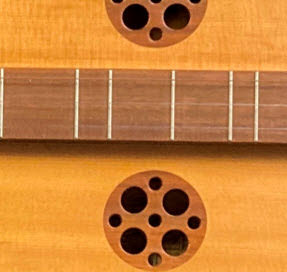 “Music is community,” said Pastor Ned Holderby “and can become a mission for God’s purposes.” Pastor Ned plays banjo and has been a Pastor for more than 17 years at Saint Stephen's UCC. Both he and his wife Suzanne, the church organist, hold master’s degrees in music. He added, “music enables accessibility (to the church) in ways we often might not consider, and the church band should always work just as we’d do in church – no judging! Pastor Ned and Suzanne have a great deal of experience with getting string players together over the years in a program called “Stumble-grass.” Stumble-grass was held in the evenings in their Woodshed Music School (which is the size of a barn). Players would gather by the half dozen or more to up their game by learning from each other. The program was free of charge and allowed fun for everyone, as well as to “trade licks,” as Pastor Ned likes to say.
In hearing of our ‘Church String Band’ goals, he highly recommends the band set an annual play list of 30 or so hymns that people can focus on for their playing. His group had 22 songs –mainly bluegrass with a couple of old time hymns.
“Have the music printed out, words and chords, so people know where they’re going, and they’ll have a chance to get there. Small groups are supportive of each other – where higher numbers bring too many opinions and can lead to sniping. Someone needs to lead the program and write out the guidelines beforehand, so everyone knows what to expect. Keep it free, keep it fun, and give everyone an opportunity to play.” One strong point Pastor Ned wishes us to think about is not to use the phrase “jam” when relating to practice sessions or get-togethers. The word jam has too many meanings, depending on your musical background, and infers a lack of structure. For instance, the term is well suited for a small group of highly skilled jazz musicians, attuned to each other’s ability.
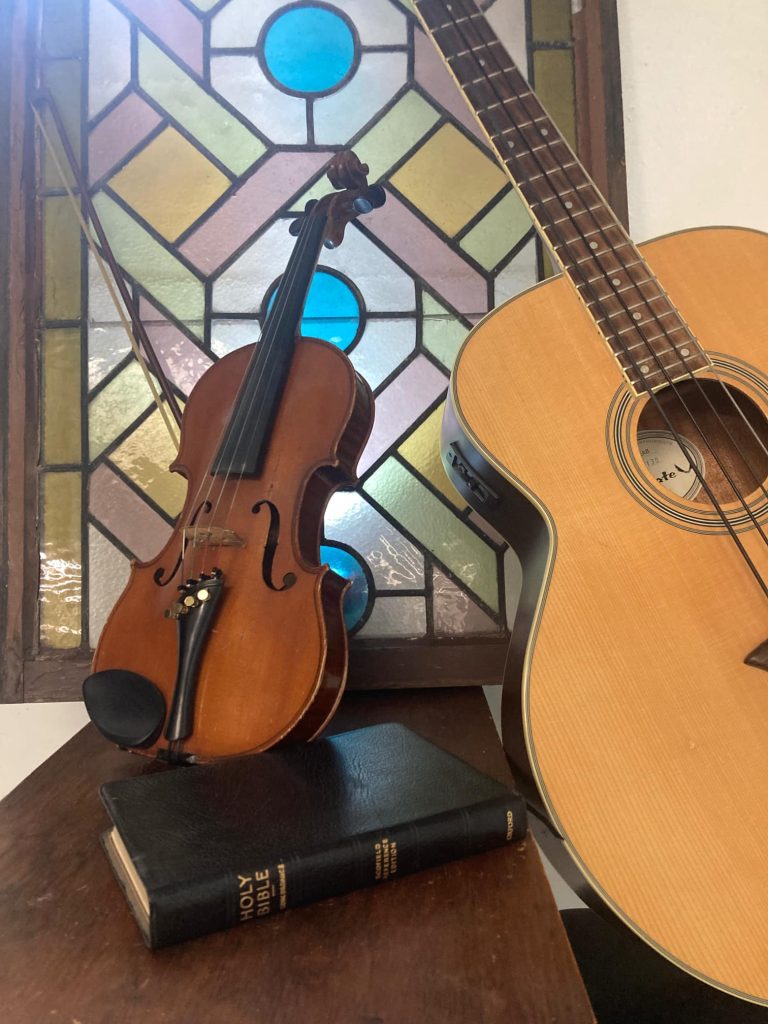 Pastor Rako Zech: plays guitar and put together a string band soon after becoming Pastor at St Paul Lutheran Church. “The idea started late in 2021 when my daughter was taking violin lessons from another church member. Soon after, three people became four, and then we realized there was interest from even more.” Since then, two of the original string band members went on to do mission work in Romania – yet the desire from the congregation and remaining players have kept the church string band alive, and is widening its capabilities. ChurchStringBand.org owes its beginnings to St Paul Lutheran Church as a direct result of players needing music and in search of simple guidelines for sustainability and how to focus on worship.
Pastor Dallas Willard: Through the writings of Pastor Dallas Willard, we are reminded of the dangers of “Christian Entertainment.” Pastor Willard explained in 1993, “The mega-church drains off people from the smaller congregations around. We are going to see a withering of the small congregations. They can’t survive. The mega-church says, "We’ve got a better show on Sunday." And about Music? “The deepest need of the human soul, from the viewpoint of the New Testament, is to get rid of our needs. Just get rid of them and say, "Lord, you know what I need and I am going to leave all that up to you." That is what I would define as a need-based religion. But that isn’t what most people mean. What they mean by need-based religion is a religion that responds to whatever I feel I need. Most people suggest that you need good music in a program. What would a service be without music? To be honest, it wouldn’t matter if your church was non-instrumental because the problem is not music, the problem is that most churches are still putting on a performance.”
It is with just such a viewpoint as Willard mentions that we, as the Church String Band, should strive to understand that our purpose is to serve the congregational singing of hymns (something Dallas appreciated) to the praise and glory of God, and never glorify ourselves. With this clear guidance in mind we have included in our hymn list many of the old-time songs Pastor Willard wrote about in his books. [Pastor Willard made these points in many lectures and books – but the above quotes can be most easily found in in the article “Spirituality Made Hard,” an Interview with Dallas Willard by Mike Yaconelli; The Door Magazine May/June 1993 #129]
Input from the Congregation: Jesus’ Church is made of people, not bricks, wood and stone, so it only made sense that we asked the opinions of people singing in church (even those in the church choir) as to how to support their worship of God. Two of the most interesting points made were inspiring for us to hear as players and supporters of the Church String Band and include the following: 1. Many, both young and old, in the congregations we interviewed said that they loved to sing the loudest when they knew the song. One put it this way “it’s easier to focus on singing to the glory to God when you already know the tune and maybe even the lyrics.” They went on to say, “one can lose her/his focus on worship when trying to learn something new and unfamiliar in real time during the service,” especially if the tune is obscure and chosen only because it reflected some wording in the upcoming sermon. 2. “We miss singing the old-time hymns. Those hymns our parents and our grandparents sang make us feel like one church that we, as a congregation, can sing praise to God with. Those are the songs that stay in your heart – they outlast Sunday. They remind us of God’s grace all week.”
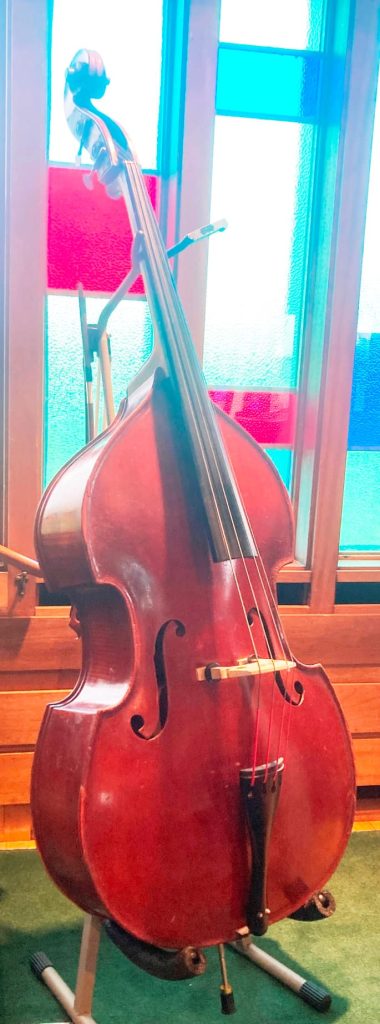 Supporting other Churches: Just as church choirs are sometimes shared, it’s not out of the question that the church string band might be asked to play at another church. This should be in the realm of possibilities as long as it is to serve a singing congregational service whose organist might be unavailable. The church string band should not be thought of as a traveling concert band.
Church String Band Mission Outreach (beyond membership): Small steps and lines not to be crossed.
String players come in all shapes and sizes and with motivations and callings that can be quite personal, and some might say, inspired. The church string band, as already discussed and described, is hoped to be a humble group focused on supporting the congregations singing during regular church service. However, it only takes a couple of old time songs, tugging at the worshipful heartstrings when played and sung, to have the question asked by a well-meaning church member, “why don’t you give a special concert!”
Tempting as that might be, a concert changes the focus from the glorification of God to the players - and that is over-the-line of what the church string band (in that form) was created to do. Nevertheless, and building on the historical missions and activities of many of the church string bands from the late 19th century and early 20th centuries, it can be said, depending on the group’s leadership thinking on this, that many people have been drawn to Christ through what was once called a ‘Congregational Hymn Sing Along Revival,’ or in some circles an ‘Old Time Gospel Hymn Sing.’
A congregational hymn sing-along revival or old time gospel hymn sing must be thought of as a program outside the church service, but can take place in the church if church leadership agrees with the mission aspects of the idea. The focus would be singing old time hymns that are well known and uplifting. This is beneficial, because having to learn a hymn while singing it for the first time often takes away from worship. As Christians, we should always be searching for ways to revive and refresh the Spirit – and for many of our ancestors, a revival hymn sing every now and then lifted many and often brought new members along in the opportunity.
Should this type of mission outreach be considered, the motivation must be outreach through opportunity. Mathew 18:20 For where two or three gather in my name, there am I with them. This being said, it should not be thought of as a fundraiser as some might be tempted to do. It must be free.
Church String Band Mission Support (financial and other):
Like any other mission related project or program that is created, funding is always a consideration. In the case of the church string band, this starts with musicians willing to give of their time and talents to support their church congregation. However, once the band supports the church service a few times, others with desire, but no instrument, may wish to join. Donations of unused instruments to a proven group make sense – and do not be surprised that with the asking, string instruments from attics and basements come forth. If a church has adopted the string band as part of the its mission and operations, the donations of instruments to the church will be just that – a donation to the church!
Support for the band may also come from the congregation by way of logistics helpers (roadies), fine woodworkers and amateur luthiers, and the church itself in lending space for meetings and practice sessions. The purchase of sheet music and perhaps the rights might be a fiscal consideration – but the cost is not high and might be covered by the church.